Insights
ARTIGO:
Eurico Pinheiro
Commercial Director
Functional Ready-to-Drink Beverages: Market Growth, Technology and the Rise of Next-Generation Functional Sodas
Marketing Size and Structural Shift in Beverages
The global soft drinks market remains close to €1 trillion in value. However, the most dynamic growth is no longer concentrated in traditional high-sugar carbonated beverages. Functional drinks – including enhanced waters, functional sodas, kombuchas and electrolyte-based beverages – represent a category exceeding €140 billion globally, with CAGR estimates frequently above 8–9%, outperforming conventional soft drinks.
This shift is driven by structural changes in consumer behaviour: increasing awareness of metabolic health, government sugar taxation policies, demand for transparent labelling and a preference for products that combine refreshment with tangible physiological benefits. Hydration alone is no longer sufficient; consumers expect added value such as electrolytes, vitamins, digestive support or light cognitive benefits.
Sugar Reduction and Formulation Complexity
Removing added sugar from ready-to-drink beverages is one of the most technically demanding reformulation challenges in modern beverage development. Sugar does not act solely as a sweetener. It contributes to body, viscosity, flavour modulation, carbonation perception, aroma release and overall mouthfeel. Its removal can result in thin texture, sharp acidity, metallic aftertaste or unbalanced carbonation perception.
Advanced formulation strategies are therefore essential. These may include multi-component sweetening systems, modulation of organic acids, mineral balancing to control flavour perception, texturising agents that replicate mouthfeel, and precise control of carbonation levels. Sweetness perception can also be influenced by aroma engineering and flavour layering techniques that enhance the perception of fullness without increasing caloric load.
Crucially, successful sugar-free innovation depends on sensory optimisation rather than ingredient substitution alone. Consumer research consistently demonstrates that taste remains the primary driver of repeat purchase, even in health-oriented categories. The most competitive functional beverages are those that overcome sugar removal challenges while maintaining the expected indulgence, texture and refreshment profile of traditional sodas.
Benchmark Brands and Competitive Landscape
International brands such as Poppi and Olipop in the United States have validated the commercial potential of functional sodas positioned around digestive health and prebiotic fibres. In Europe, the rise of kombucha and natural low-calorie sodas confirms consumer openness to alternatives.
However, the competitive landscape also highlights recurring weaknesses: overly strong functional positioning with polarising taste profiles, excessive sweetness from artificial sweeteners, or sensory profiles that fail to replicate the satisfaction of conventional carbonated drinks. The gap between health promise and sensory performance remains one of the category’s central tensions.
The Positioning of JAR in the Functional Soda Segment
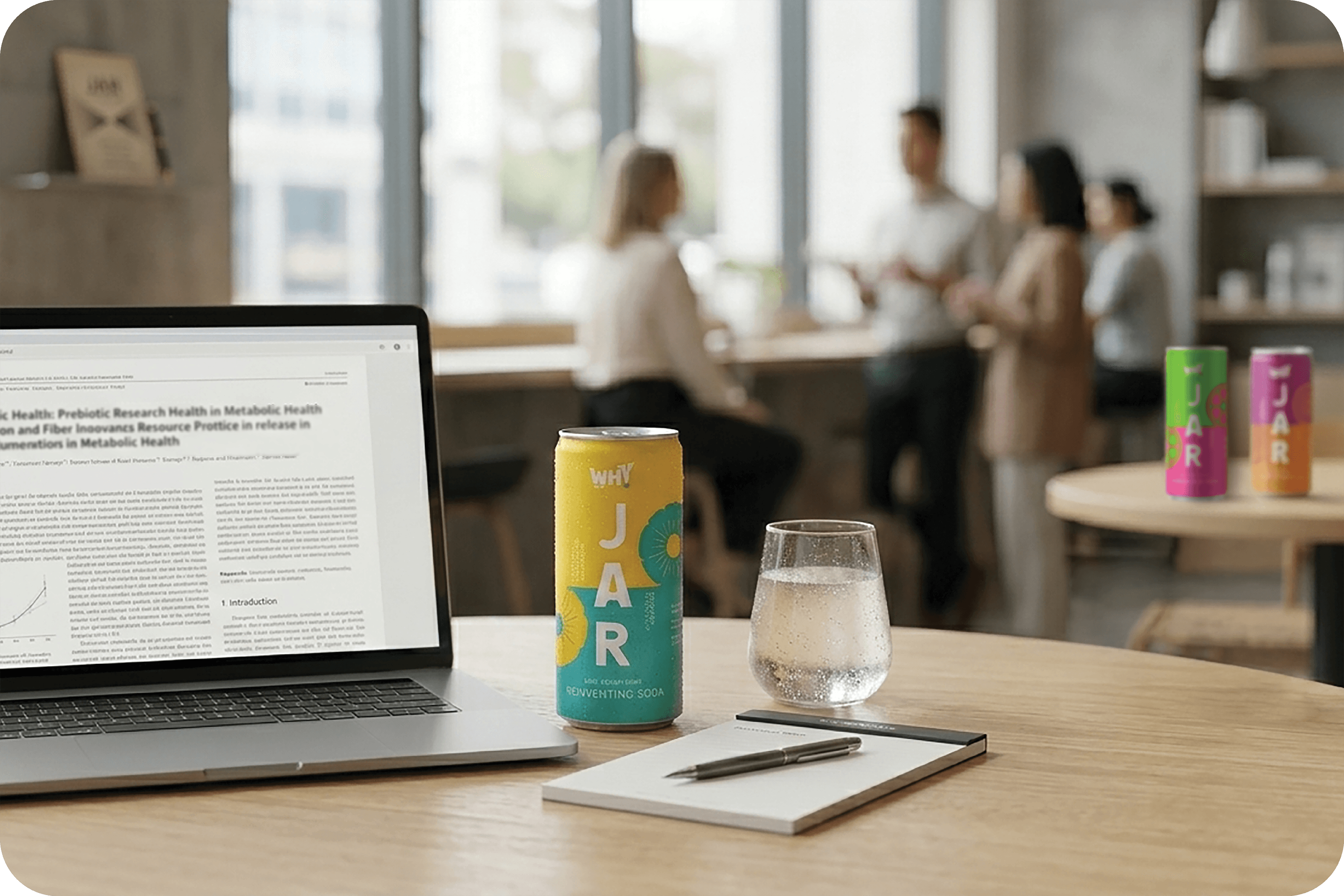
Within this evolving landscape, JAR positions itself in a hybrid territory between flavoured water, functional beverage and lifestyle soda. Its concept – derived from ‘Just About Right’ – reflects a deliberate balance between taste, naturality and functionality.
Rather than competing purely on health claims, JAR focuses on delivering a complete sensory experience aligned with modern expectations: no added sugar, no artificial sweeteners, light carbonation and functional enrichment through vitamins and minerals. The objective is not to create a niche health drink, but to reinvent soda in a way that remains socially inclusive and suitable for everyday consumption.
This balanced approach addresses one of the main barriers in functional beverage adoption: the trade-off between health and pleasure. By prioritising flavour, texture and drinkability alongside functional cues, JAR aligns itself with the most promising segment of the market – consumers seeking moderation without extremism.
JAR Within a High-Growth Sector
As sugar reduction, alcohol moderation and functional hydration converge, next-generation sodas represent one of the most promising innovation spaces in beverages. Consumers increasingly seek drinks that can replace traditional soda or even alcoholic options in social contexts, without sacrificing taste or experience.
JAR is positioned to capture this opportunity by combining credible functional elements with strong branding, modern packaging and a clear sensory promise. In a category where technical formulation excellence and market positioning must coexist, brands capable of delivering both are best placed to drive long-term growth.
Other Insights
30 Sept 2026
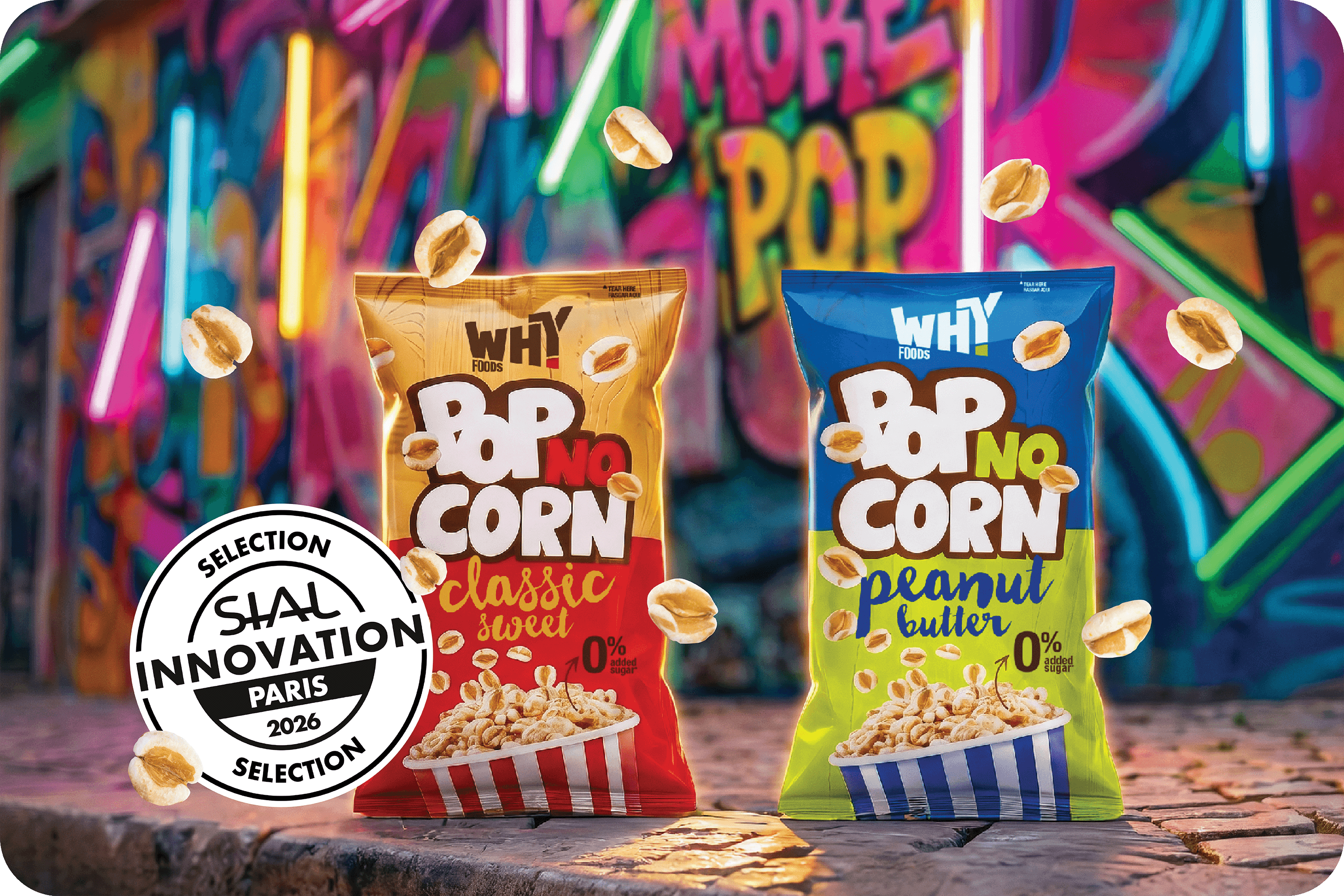
Pop No Corn at SIAL Innovation 2026: Redefining Healthy Functional Snacking
Pop No Corn Classic Sweet made the SIAL Innovation Selection 2026. Discover how Equanto combines taste, prebiotic fibre, and nutrition. Visit our stand!
Margarida Esteves
Nutritionist & R&D Director

26 Jun 2026
Sugar Reduction & Ultra-Processed Foods: Reformulating the Future of Food Without Compromising Taste
A deep analysis of the health impact of added sugar and ultra-processed foods, regulatory pressure, formulation challenges and how forward-looking brands are building credible sugar-free alternatives.
Francisco Reis
Executive Manager
25 May 2026
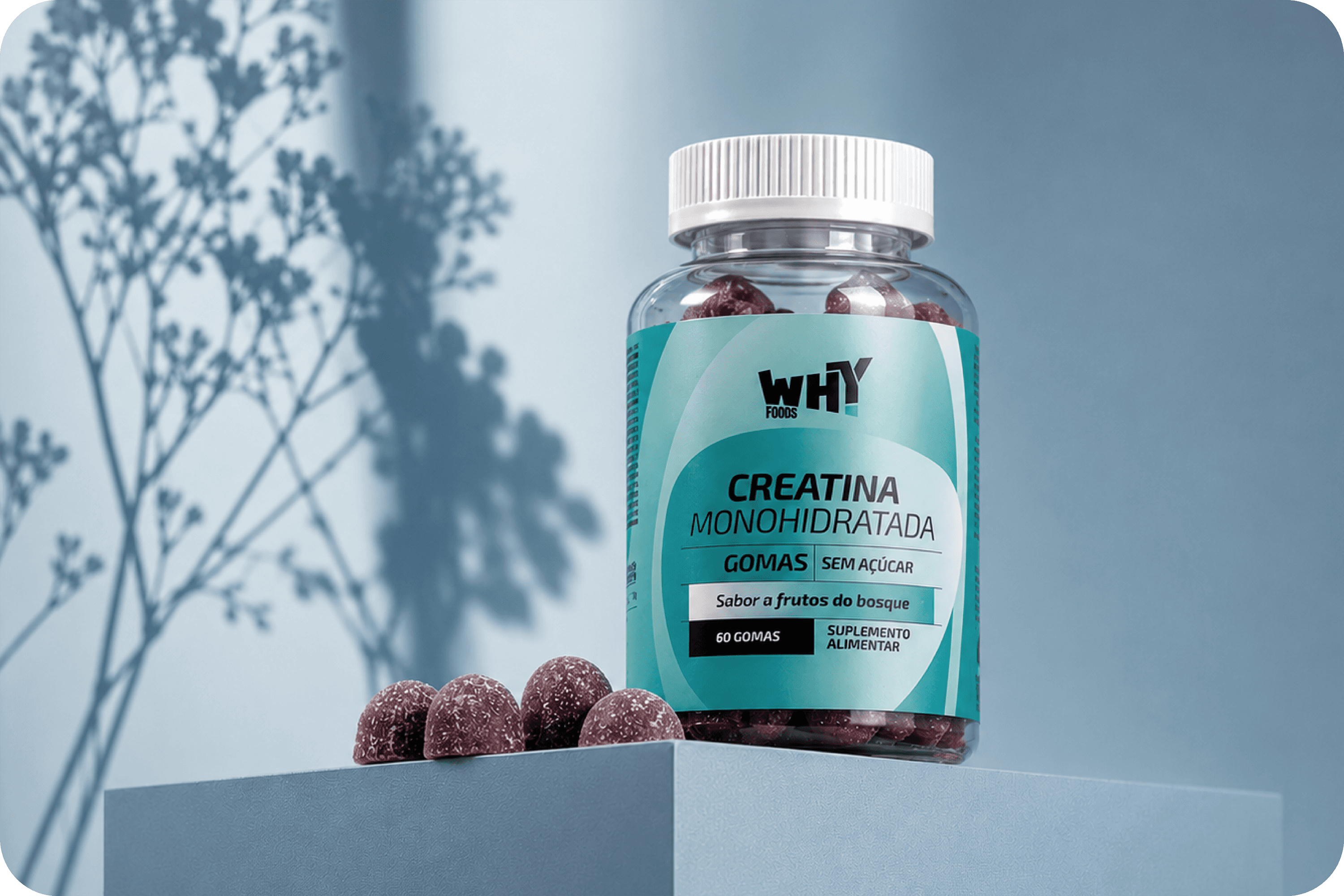
Sugar-Free Gummies and Chewables: Redefining Supplement Consumption Through Experience and Credible Nutrition
An expert analysis of the fast-growing gummy supplements market, sugar-free formulation challenges and the positioning of WHY Foods gummies within this new generation of supplementation.
Margarida Esteves
Nutritionist & R&D Director

21 Apr 2026
JAR - Reinventing Soda: How Next-Generation Functional Sodas Win on Taste, Trust and Everyday Social Use
A deep dive into the reinvention of soda: market forces, formulation science, sensory design and why JAR is positioned to win as a sugar-free, functional, lifestyle soda.
Francisco Reis
Executive Manager