Insights

ARTIGO:
Francisco Reis
Executive Manager
Gut Health & Functional Foods: From Microbiome Science to Everyday Nutrition Solutions
Gut Health as a Central Pillar of Modern Nutrition
Gut health has evolved from a specialist topic within gastroenterology to one of the most influential pillars of modern nutrition and wellness. Advances in microbiome research have demonstrated strong links between gut health and immune function, metabolic regulation, inflammation control and even cognitive and emotional wellbeing.
Today, consumers increasingly understand that digestive health is not only about comfort, but about long-term resilience and performance. This shift has transformed gut health into a primary driver of purchasing decisions across food, beverage and supplement categories.
The Gut Microbiome: From Scientific Insight to Consumer Awareness
The human gut microbiome consists of trillions of microorganisms that interact dynamically with diet, lifestyle and environment. Scientific literature increasingly supports the role of microbial diversity in reducing inflammation, improving nutrient absorption and strengthening immune defences.
What is particularly notable is the speed with which this scientific knowledge has translated into consumer awareness. Terms such as ‘microbiome’, ‘prebiotics’ and ‘fibre diversity’ have entered mainstream language, reflecting a more educated and proactive consumer base.
Prebiotics vs Probiotics: Why Food Matters More Than Supplements Alone
While probiotics have played an important role in popularising gut health, prebiotics are increasingly recognised as the foundation of microbiome support. Prebiotics selectively nourish beneficial bacteria already present in the gut, promoting long-term ecosystem balance.
From a behavioural standpoint, functional foods offer a major advantage over supplements. They integrate naturally into daily eating routines, reducing reliance on pill-based compliance. This is particularly relevant for prebiotics, where consistent intake over time is more impactful than short-term dosing.
Fibre Deficiency: A Hidden Nutritional Gap
Despite growing interest in gut health, fibre intake across Europe remains significantly below recommended levels. Modern diets, characterised by refined grains and ultra-processed foods, have reduced exposure to diverse fibre sources.
This gap represents both a public health concern and an innovation opportunity. Functional foods enriched with prebiotic fibres can help address this deficit without requiring radical dietary changes.
Functional Foods as the Most Scalable Gut Health Solution
Functional foods occupy a unique position at the intersection of nutrition science and consumer behaviour. Unlike supplements, they do not require habit change; unlike indulgent foods, they deliver measurable physiological benefits.
Breakfast cereals, granolas, snacks and beverages are particularly effective vehicles for gut health support due to their frequency of consumption. When formulated correctly, these products enable daily, consistent delivery of prebiotic fibres and other microbiome-supporting compounds.
Formulation Challenges: Delivering Fibre Without Compromising Taste
Incorporating meaningful levels of prebiotic fibre into foods presents technical challenges. Fibres influence texture, water binding, viscosity and flavour perception. Excessive or poorly selected fibres can result in gritty mouthfeel, off-notes or digestive discomfort.
Successful gut health products rely on advanced formulation strategies that balance fibre type, dosage and processing conditions. Sensory optimisation remains critical, as consumer acceptance ultimately determines long-term adherence.
WHY Foods and the Everyday Gut Health Proposition
WHY Foods positions its functional food portfolio around everyday nutritional relevance rather than short-term health claims. Its granolas, formulated with prebiotic fibres and no added sugars, are designed to support gut health through habitual consumption.
By focusing on clean label ingredients, fibre richness and balanced sensory profiles, WHY Foods aligns with consumers seeking simple, food-first approaches to digestive wellbeing. This positioning reflects a broader shift away from ‘quick-fix’ supplementation toward sustainable nutrition routines.
Industrial Production and the Integrity of Functional Foods
Delivering gut health benefits at scale requires more than ingredient selection. Fibre stability, batch consistency and process control are essential to ensure both nutritional efficacy and sensory repeatability.
As a producer operating within functional and organic food systems, Equanto combines formulation expertise with industrial reliability. This enables the translation of microbiome science into market-ready functional foods that perform consistently across large-scale production.
Conclusion: Gut Health as a Long-Term Food Strategy
Gut health is no longer a niche wellness trend — it is a foundational element of modern nutrition. Functional foods provide the most scalable, credible and consumer-friendly pathway to support microbiome balance.
By integrating scientific understanding, sensory excellence and industrial discipline, brands such as WHY Foods — supported by Equanto’s manufacturing capabilities — are positioned to lead the next phase of gut health innovation.
Other Insights
30 Sept 2026
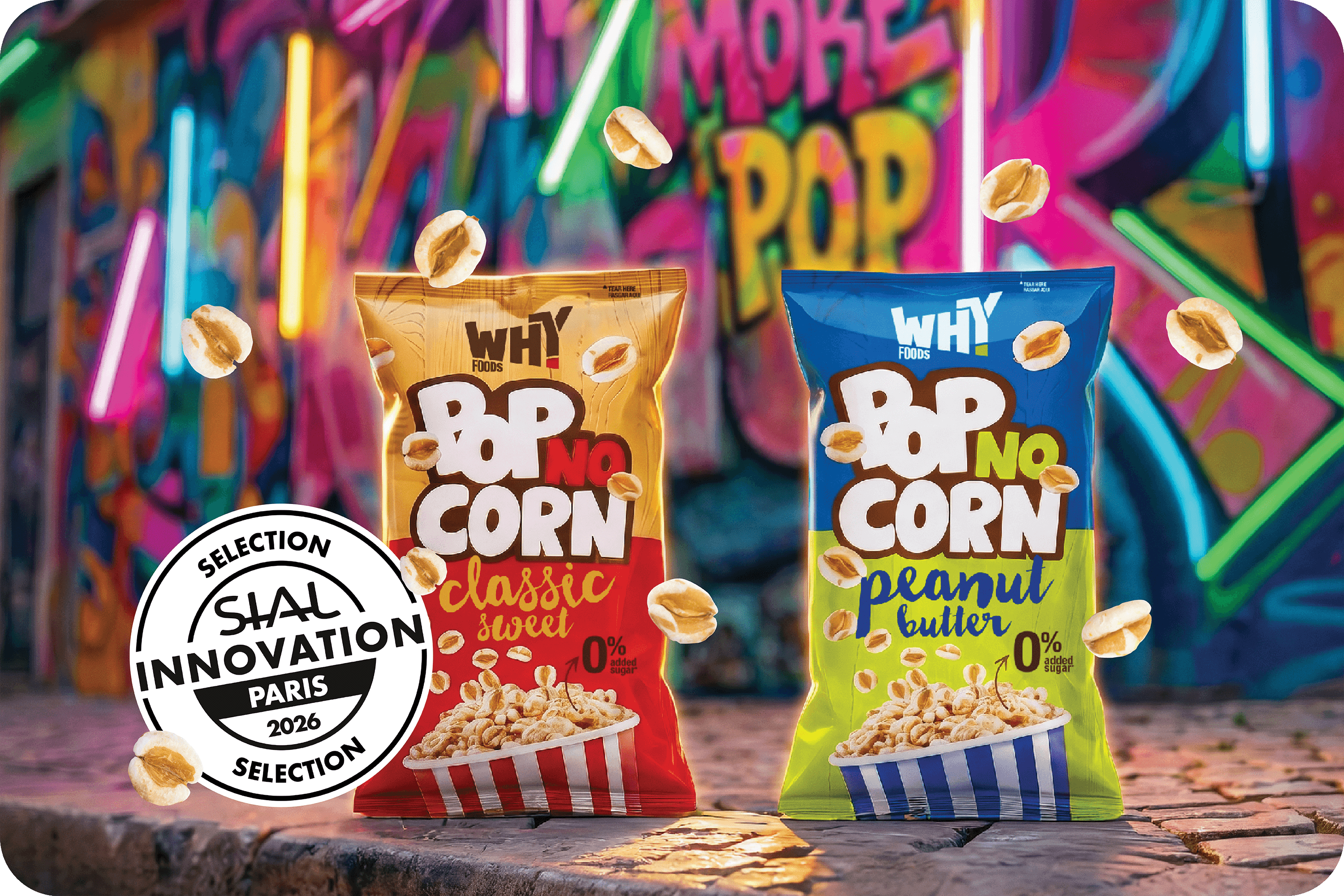
Pop No Corn at SIAL Innovation 2026: Redefining Healthy Functional Snacking
Pop No Corn Classic Sweet made the SIAL Innovation Selection 2026. Discover how Equanto combines taste, prebiotic fibre, and nutrition. Visit our stand!
Margarida Esteves
Nutritionist & R&D Director

26 Jun 2026
Sugar Reduction & Ultra-Processed Foods: Reformulating the Future of Food Without Compromising Taste
A deep analysis of the health impact of added sugar and ultra-processed foods, regulatory pressure, formulation challenges and how forward-looking brands are building credible sugar-free alternatives.
Francisco Reis
Executive Manager

25 May 2026
Sugar-Free Gummies and Chewables: Redefining Supplement Consumption Through Experience and Credible Nutrition
An expert analysis of the fast-growing gummy supplements market, sugar-free formulation challenges and the positioning of WHY Foods gummies within this new generation of supplementation.
Margarida Esteves
Nutritionist & R&D Director

21 Apr 2026
JAR - Reinventing Soda: How Next-Generation Functional Sodas Win on Taste, Trust and Everyday Social Use
A deep dive into the reinvention of soda: market forces, formulation science, sensory design and why JAR is positioned to win as a sugar-free, functional, lifestyle soda.
Francisco Reis
Executive Manager